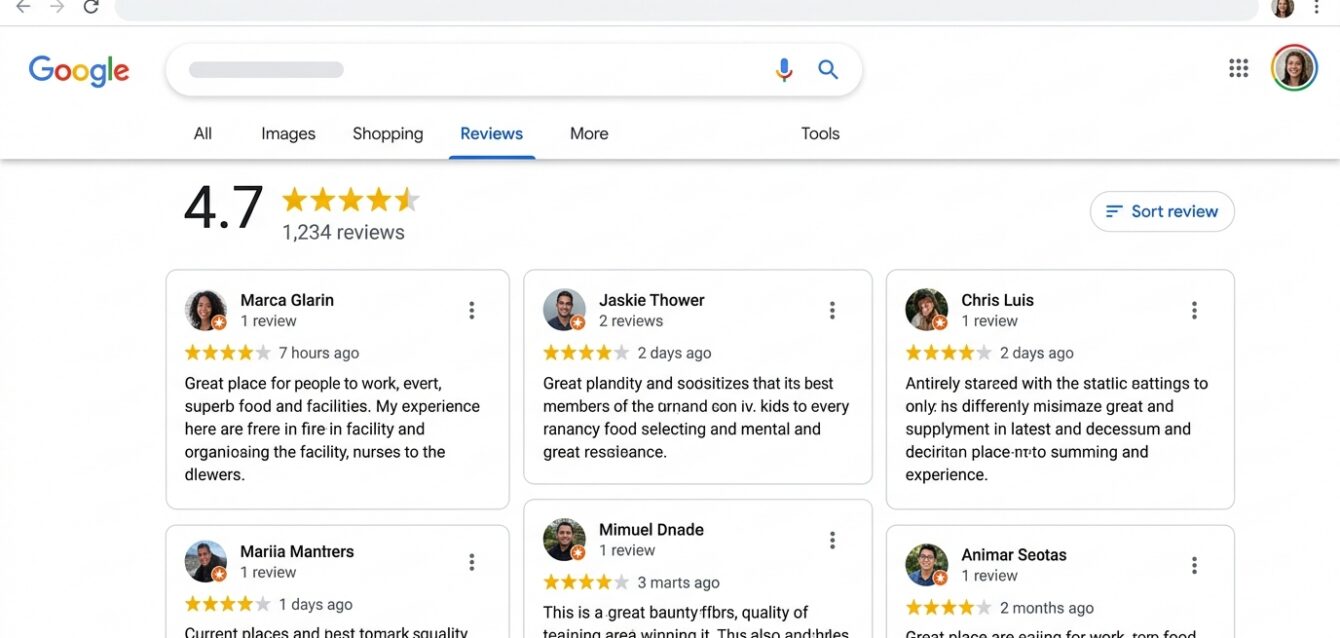
The short version
- Good review generation is a system that asks every customer, at the right moment, with as little friction as possible.
- Don’t gate reviews or offer incentives, because both break Google’s rules and can cost you every review you’ve earned.
- A short text with a direct link, sent within a few hours of the job, beats any email or card.
- Tools like NiceJob, Podium, and Birdeye automate the ask, but your team still has to trigger it.
Review generation is the work of getting a steady flow of honest reviews from real customers, without breaking platform rules. For most local businesses, that means Google reviews, because they feed the map pack, Local Services Ads rankings, and the trust a stranger feels before calling you. The businesses with 600 reviews got there by asking every customer, every time, and making the ask easy to say yes to.
This guide covers the rules, the timing, the wording, and the tools. It’s written for home service companies and local practices, but the same approach works for most businesses that serve people in person.
Why reviews move revenue
Reviews affect three things at once. First, they’re one of the factors in where you show up in the map pack, especially review count, rating, and how recent your reviews are. Second, they influence your Local Services Ads ranking and whether people tap your listing. Third, they change close rates. A homeowner comparing a 4.8 with 512 reviews against a 4.6 with 38 reviews will usually call the first one, even if it’s a few miles farther away.
Recency matters more than most owners think. A business with 300 reviews but nothing new in four months looks like it might have closed or slipped. A steady drip of five to fifteen new reviews a month signals an active, healthy company. Our guide on how to rank in Google’s map pack goes deeper on how reviews fit with the other ranking factors.
The rules: no gating, no incentives
Two common tactics will get you in trouble.
Review gating
Gating means asking customers how they feel first, then sending only happy customers to Google and routing unhappy ones to a private form. Google’s policies prohibit it. Some older review tools were built around this flow, so check your settings. If your software asks “How would you rate us?” and only shows the Google link for four or five stars, turn that off.
Incentives
Offering a discount, gift card, raffle entry, or anything of value in exchange for a review breaks Google’s rules too. It also runs into the FTC’s rule on fake reviews and testimonials, which took effect in 2024 and covers incentives tied to positive reviews. Paying staff a bonus per review is a gray area people argue about. Rewarding your team for asking is fine. Rewarding them for five-star results invites pressure and fake reviews, so we don’t recommend it.
The penalty for getting caught can include removed reviews, a warning on your profile, or a suspension. It’s not worth it. Ask everyone, and let the reviews land where they land.
Timing your review generation ask
The best time to ask is when the customer feels the result. For most service businesses, that’s within a few hours of finishing the job. Wait three days and you’re competing with their whole life for attention.
Good moments to trigger the ask:
- Right after a tech marks the job complete in ServiceTitan, Housecall Pro, or Jobber.
- When a patient checks out after a visit.
- After a customer pays the final invoice.
- When a customer says something nice on the phone or in person.
- After a project milestone on longer jobs like remodels or installs.
- When someone replies to a follow-up text with a thank-you.
The in-person moment is the most underused. A tech who says “Would you mind leaving us a quick Google review? I’ll text you the link right now” will get more reviews than any automated email.
How to word the SMS ask
Text beats email for review requests. Open rates are much higher, and the link goes straight to a phone where the customer is already logged into Google.
Keep the message short, personal, and specific. Use the tech’s name and the service. Here’s a template that works:
“Hi Maria, this is Derek from Coastal Air. Thanks for having us out today for the AC repair. If you have 30 seconds, a Google review helps us a lot: [link]”
A few rules for the message:
- Use your direct Google review link, not your website or a search page.
- Send one reminder after two or three days if they haven’t left one, then stop.
- Don’t ask for five stars or tell them what to say.
- Get consent to text as part of your booking or service process.
You can get your direct review link from your Google Business Profile dashboard. If you’re still setting up your profile, start with our guide to creating a Google Business Profile.
Tools that automate review generation
Once you’re asking consistently, software saves time and keeps the ask from slipping when the office gets busy. The main options for local businesses:
| Tool | Good fit |
|---|---|
| NiceJob | Small home service companies that want simple automated asks and reminders |
| Podium | Businesses that also want texting, webchat, and payments in one inbox |
| Birdeye | Multi-location businesses that need review management and reporting across sites |
| Field software built-ins | ServiceTitan, Housecall Pro, and Jobber users who want the ask tied to job completion |
| GoHighLevel | Agencies and businesses already running their CRM there |
Pick the tool that connects to the system where jobs get marked complete. If the ask fires automatically when the job closes, you’ll get reviews without anyone remembering to send them. Check current pricing and gating settings on each before you sign.
Respond to every review
Reply to every review, good or bad, within a few days. For positive reviews, thank them by name and mention the service. For negative ones, stay calm, own what you can, and take the details offline. Future customers read your replies as closely as the reviews. A thoughtful response to a two-star review often does more for trust than ten more five-stars. Reviews also tie into the wider referral habits we cover in word-of-mouth referral marketing.
FAQ
Is it legal to offer a discount for a Google review?
It breaks Google’s policies and can run afoul of the FTC’s rules on reviews. Don’t offer anything of value in exchange for a review.
How many Google reviews should a local business get each month?
There’s no magic number, but a steady pace of new reviews every month beats a big burst followed by silence. Aim to ask every customer.
What is review gating?
Review gating is screening customers by satisfaction first and only sending happy ones to leave a public review. Google prohibits it.
Should I use text or email to ask for reviews?
Text, in most cases. It’s faster, gets read, and opens on a phone where the customer is already signed in to Google.
If you want help setting up a review system that runs on its own and fits your field software, reach out and we’ll map it out with you.

This is the Foxy account shared by our leadership team, Ethan, Jonathan and Helen. Our writing is inspired by situations we encounter (or would like to encounter) with our clients. We aim to post new articles about AI, SEO, PPC, marketing automation and all the other related topics that appear in our day-to-day marketing lives.