TL;DR
- Vero Beach is a small, high-income market with a seasonal population, which changes how you should allocate your ad budget
- Google Search ads outperform most other channels here because intent is high and competition is relatively low
- Local SEO and your Google Business Profile do a lot of heavy lifting in a market this size
- Facebook and Instagram ads work, but audience targeting needs to account for the seasonal swing
- Most Vero Beach businesses are overspending on brand awareness and underspending on conversion
- Attribution matters more in a small market because you can’t afford to guess which channels are working
If you run a business in Vero Beach and you’ve been wondering whether your advertising is actually doing anything, this post is for you. Not theory. Not best practices from a national agency that’s never set foot on Ocean Drive. Practical guidance for a market that most marketers don’t really understand.
We are based here. We know this market. And the way advertising works in Vero Beach is genuinely different from how it works in Miami, Orlando, or even Fort Pierce. After a few years of web design in Vero Beach, we picked up a few things about what works and what doesn’t.
The Vero Beach Market Is Small, Wealthy, and Seasonal
That combination of factors changes everything about how you should advertise.
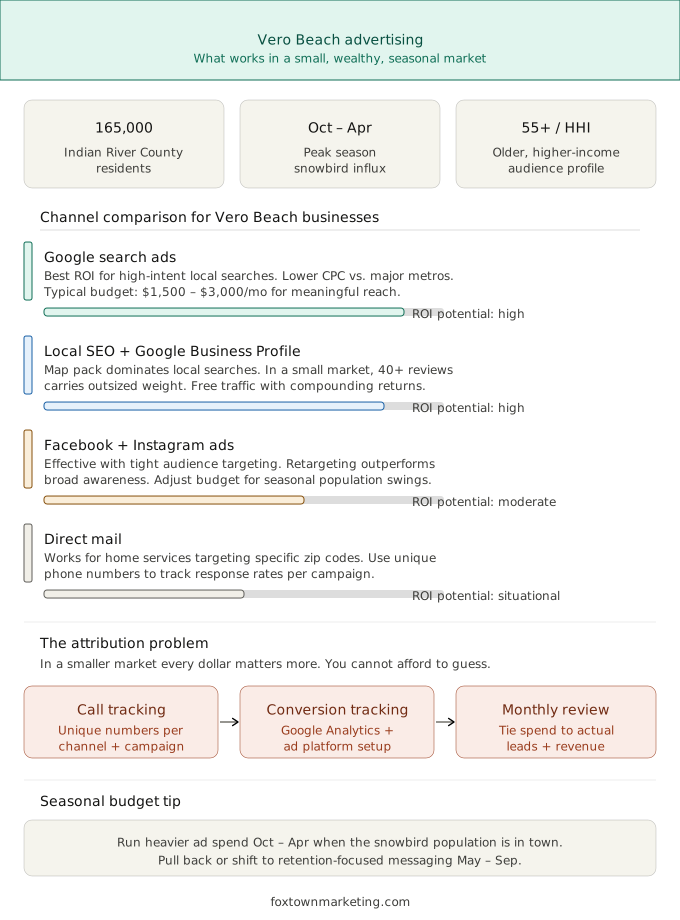
Indian River County has roughly 165,000 residents. That is not a big pool. When you layer on the fact that a meaningful portion of the population is seasonal (the snowbird phenomenon is very real here), you have a market that fluctuates between October and April versus the summer months.
What does that mean for advertising?
First, your cost per click on Google is generally lower than major metros. You are not competing against a thousand law firms or contractors the way you would in West Palm or Tampa. That is good news. It means a smaller ad budget can get you real visibility if you spend it right.
Second, if your business is seasonal or dependent on the winter population, your ad spend should reflect that. Running the same monthly budget year-round when half your potential customers leave in May is a fast way to burn money.
Third, the Vero Beach audience skews older and higher income. That affects which platforms work and which messaging lands. A flashy TikTok-style ad probably is not your best bet. Clear, credible, benefit-focused copy tends to outperform clever here.
Google Search Ads Are Your Best Starting Point
For most Vero Beach businesses in the professional services, home services, medical, or legal space, Google Search ads are where your advertising budget should go first.
The reason is intent. Someone typing “family law attorney Vero Beach” or “AC repair Vero Beach” is not browsing. They have a problem and they want to solve it. You want to be the first answer they see.
The good news in a market this size is that competition for a lot of local keywords is not brutal. You can achieve meaningful impression share without a massive monthly budget. We have seen local businesses get significant traction with $1,500 to $3,000 per month in Google Ads spend, which would barely scratch the surface in a market like Miami.
What matters is structure. Running Google Ads without proper campaign setup, dedicated landing pages, and call tracking is still going to waste money even if the competition is lighter. Every ad needs to go to a page built to convert, not your homepage. Every phone call needs to be tracked back to the keyword and campaign that drove it.
We covered the website side of this in depth in our post on website design in Vero Beach, but the short version is: a high-converting landing page matters as much as the ad itself.
Local SEO Does a Lot of the Heavy Lifting for Vero Beach Advertising
In a market the size of Vero Beach, your Google Business Profile is not optional. It is one of the most important marketing assets you have.
When someone searches “dentist near me” or “plumber Vero Beach” from their phone, what shows up first is the Google Map Pack, not the organic results. If your GBP is fully built out, regularly updated, and generating reviews, you can capture a significant percentage of that high-intent traffic without paying per click.
The basics that a lot of local businesses are still getting wrong:
Your GBP categories need to be specific. “Marketing agency” is too broad. “Advertising agency” or “digital marketing agency” tells Google more precisely what you do.
Reviews matter more in a small market because there are fewer of them. A business with 40 reviews in Vero Beach carries more weight than a business with 40 reviews in a city where competitors have 400. Make it a habit to ask satisfied customers for a review and send them a direct link.
Your website and your GBP need to be consistent. Same phone number, same address, same hours. Inconsistency here is a local SEO killer that is easy to fix and easy to overlook.
We also did a post on Vero Beach SEO services if you want to learn more about that.
Facebook and Instagram Can Work, With Caveats
Social advertising in Vero Beach can be effective but it requires some thought around audience targeting that national playbooks often miss.
The biggest mistake is targeting the full Indian River County population without thinking about who actually buys from you. If your customer is a homeowner over 55 with disposable income, a broad county-level audience is going to deliver a lot of impressions to people who will never convert.
The seasonal factor matters here too. A Vero Beach business targeting homeowners might want to run more aggressive social campaigns between November and April when the seasonal population is in town, then pull back or shift messaging in the summer.
Retargeting is where social ads tend to deliver their best ROI in a small market. Once someone has visited your website, a well-structured retargeting campaign on Meta can keep you in front of them at a relatively low cost. In a town where word of mouth still carries weight, staying visible matters.
The Attribution Problem Is Especially Painful in a Small Market
Here is something we see constantly with Vero Beach businesses: they are spending real money on advertising, they are getting calls and leads, and nobody can tell the business owner which channels are actually producing them.
In a large market you can sometimes get away with this because volume masks the inefficiency. In a smaller market, every dollar matters more. If you are spending $2,000 a month across Google, Facebook, and a local directory listing, you need to know which of those is generating your cases, clients, or customers.
The fix is not complicated. You need call tracking (CallRail is what we use with clients) that assigns unique phone numbers to each channel. You need conversion tracking set up properly in Google Analytics and your ad platforms. And someone needs to actually look at that data on a regular basis and make decisions based on it.
Most small businesses in Vero Beach are running on gut feel. That is a meaningful competitive advantage for businesses willing to build the measurement infrastructure.
What About Traditional Advertising?
The Vero Beach market still has active traditional advertising options: the Press Journal, local radio, direct mail to specific zip codes. These are not irrelevant, especially if your audience skews older.
Direct mail in particular can work well for home services businesses targeting specific neighborhoods. You can pull a list of homeowners in a specific zip code, send them something physical, and track response rates. It is not glamorous but it works in markets where the audience is smaller and more defined.
The challenge with traditional advertising is attribution. It is hard to know if someone called because of the newspaper ad or because they found you on Google. If you are running both, make sure the traditional ads have a unique phone number or a specific offer code so you can tie response back to the spend.
Parting Thoughts On Vero Beach Advertising
Vero Beach is a market where a smart, focused advertising strategy beats a big budget every time. The competition is manageable. The audience is specific. And there is real money being left on the table by local businesses that are either not advertising at all or advertising without any measurement in place.
If you want to talk through what this looks like for your specific business, reach out here. The first conversation is always free.